
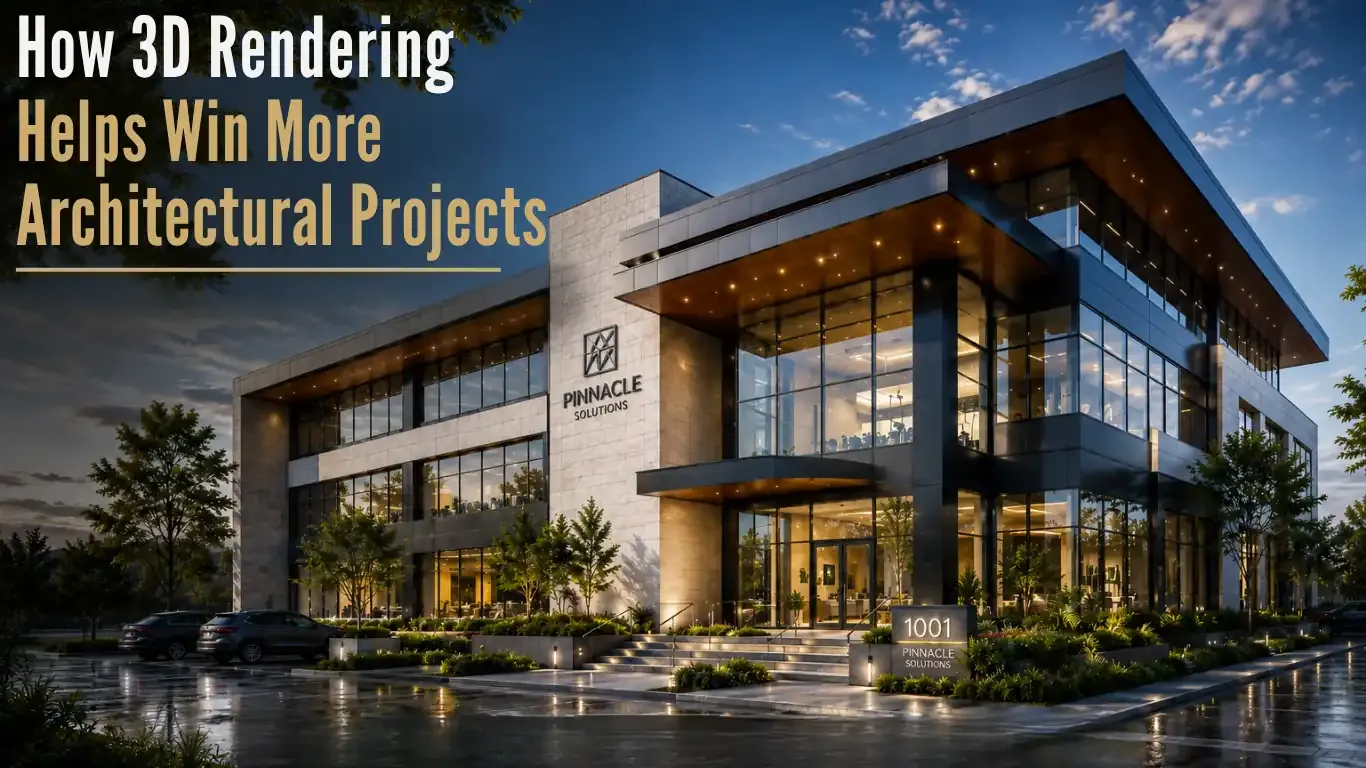
In the present intensely competitive design business, architects and design firms are always seeking methods to distinguish themselves, to demonstrate ability to convey the vision, and ultimately to acquire more customers. Architectural 3D rendering is one of the strongest weapons to help redefine the way architectural projects are presented and authorized. This technology has become an integral component in the modern architectural workflow, and the technology can be used from concept development to final client presentations, and firms that make use of it, are seeing measurably better results.
What Is Architectural 3D Rendering?
Essentially, 3D architectural renderings is translating 2D architectural drawings and plans into a realistic three-dimensional image. Architects no longer have to have clients envision what a building might look, feel, and function like from a flat blueprint, they can now present them with a real view of the finished product. From abstract technical drawings to immersive visuals, this change has revolutionized the method of design concept communication and approval.
Why 3D Rendering Matters for Winning Projects
1. It Bridges the Communication Gap
Not all customers are able to read architectural blueprints with ease. Technical drawings are accurate representations of a design, but cannot capture the emotional and spatial experience of the design. The problem is overcome by architectural visualization, which converts intricate plans into easy-to-understand imagery. Having a visual representation of clients’ homes, offices, or commercial spaces can help them feel confident and take action toward their projects.
2. It Builds Trust Through Realism
Photorealistic rendering is a higher level of visualization, in which effects such as lighting, textures, materials and environmental context are added to make the image seem more realistic. Realistic landscaping, material finishes, and the proper sunlight directionality add to the trust in rendering that it is a true representation of what the client can expect once the work is finished. This kind of realism makes uncertainty a thing of the past, and it’s a huge obstacle to a client saying “yes.
3. It Strengthens Client Presentations
Projects are won or lost in the client presentation stage. A well-crafted, professional-looking rendering makes a pitch look truly professional. Renders are used to add extra context when a static floorplan or verbal explanation isn’t enough and should allow architects to walk clients through every angle of the building, as well as various interior details and even lighting changes from day to night. This visual narrative helps to engage the client and stakeholders emotionally in the project so that it’s more likely they’ll say yes and the budget is approved.
4. It Reduces Costly Miscommunication
It is costly and time consuming to make changes after construction is finished. With the help of an architectural 3D rendering early on in the process, architects and clients are able to find problems, unaligned expectations or design mistakes before construction begins. This proactive approach is cost effective, avoids delays and ultimately fosters better client relationships in the long-term with transparency and trust.
5. It Sets Firms Apart From Competitors
In a saturated market, companies with a consistent history of producing eye-catching and lifelike images stand out as having a competitive advantage. Naturally, when potential clients have several architecture firms to choose from, they’re going to look at those who can demonstrate what they can do, not just what they say they can do. Capturing a firm’s attention and making the client feel professional by having them notice high-quality architectural CGI is an effect of the CGI that a business creates.
Key Applications of 3D Rendering in Winning Projects
Concept Development and Design Exploration
Architects will want to investigate a number of design ideas before settling on one. By using architectural 3D rendering, the teams can easily see the various layout options, materials, and forms, and they can pick the best one before investing too much effort into detailed drafting.
Marketing and Business Development
Renderings aren’t only helpful on projects, they also are excellent marketing tools. In the portfolios, websites, and social media, polished visuals are used by firms to lure new clients. An impressive photorealistic rendering portfolio can be the most powerful selling tool for a particular company.
Investor and Stakeholder Buy-In
For large-scale projects, a few different stakeholders, city planners, or investors may need to approve the project. This is where architectural visualization can come in handy, providing decision makers with a clear, realistic preview of the finished project and eliminating back and forth.
Interior and Exterior Detailing
Whether it’s placing furniture in interior renderings or materials on the facade of an exterior render, rendering lets clients make the details more precise long before construction begins. This team effort can lead to a higher client satisfaction level and avoid unnecessary changes later on that would result in extra costs.
How to Use 3D Rendering Effectively to Win More Clients
- Invest in Quality Over Speed – If you rush a poor quality render, it will cost you more than you would if you had waited for the right time to have a good quality render. Focus on precision, illumination and realism.
- Tailor Renders to Your Audience – For residential, warm and lifestyle images might work well, and for commercial, clean and data oriented images might work well.
- Combine Renders With Walkthroughs – Adding animated walkthroughs or 360-degree views, in conjunction with static renders, provide a more immersive experience for client presentations.
- Keep Technical Drawings and Rendering Workflows Aligned – Make sure your base drawings are correct and current: Renders are as reliable as the technical data upon which they are based.
- Showcase Renders in Proposals – Don’t hold back your best pictures for the last pitch. Utilize them during the proposal process to raise early excitement and confidence.
Also Read: Why Brands Prefer 3D Product Rendering Over Photoshoots
Frequently Asked Questions
1. What is architectural 3D rendering?
Architectural 3D rendering is the technique of creating a three-dimensional image that represents a building or space in a realistic way, before it is built.
2. How does 3D rendering help win more architectural projects?
It can assist in making designs more understandable, emotional, and professional during client presentations, which can lead to quick decisions and trust building, resulting in a higher probability of clients approving and taking action on a project.
3. What’s the difference between architectural visualization and photorealistic rendering?
The word ‘visualizing’ describes the process of converting a design into a visual format (either 2D or 3D), whereas ‘photorealistic’ refers to a specific style of visualization that portrays the light, material and texture of a design as if it were a photograph.
4. Is 3D rendering only useful for large commercial projects?
No. 3D rendering is very effective for projects of any size, small residential renovations, large-scale commercial projects; anywhere the client and/or stakeholders can clearly see the results of a project.
5. How long does it take to create an architectural render?
Time varies depending on complexity, level of detail, and whether it is still or animated walkthrough. Depending on the complexity of the render, from simple to almost CGI, it can take a day or two.
6. Can 3D rendering be used before a design is finalized?
Yes. Some architects render to visualise a range of design possibilities, materials and layouts in the early stages of the concept development to prevent expensive changes later.
7. Why is architectural CGI important for marketing?
Architectural CGI enables companies to create impressive content, differentiate themselves from others, and grow their portfolios. By creating visually engaging, informative content, high-quality architectural CGI can help companies stand out from the crowd and attract new clients.
8. Do I need 3D rendering if I already have detailed CAD drawings?
Yes. CAD drawings are accurate in terms of the technical aspects, but most clients have trouble grasping the drawings. The 3D rendering conveys those technical details into something far more easily digestible and approvable for the non-technical stakeholders.
The Bottom Line
Creating architectural 3D renderings is no longer a “nice to have” anymore, but it is now a requirement for every architect who aspires to have more projects. With the ability to convert technical drawings into engaging and photorealistic rendering, companies can effectively communicate their ideas, foster client trust, avoid costly mistakes, and make themselves stand out in a saturated market. From a small residential project to a large commercial development, nothing is more important to a company than investing in good architectural CGI and architectural visualization.
In a business where first impressions count, you’ll want to demonstrate your vision, rather than simply state it, and make a decision that will make your firm stand out. Looking to capture even more business with eye-catching, photo-realistic graphics? Contact our team so we can help you make your next architectural project a reality!
