
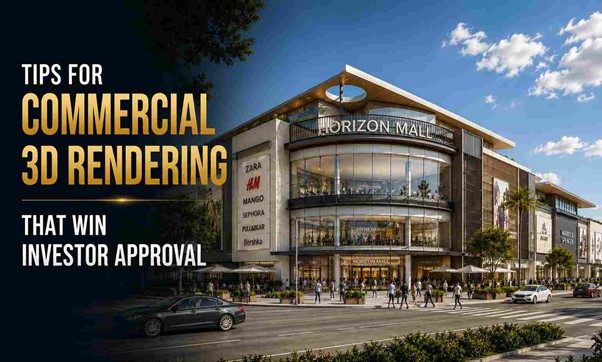
Getting a commercial project greenlit is not only a matter of a good business plan, but it also involves convincing investors of the vision. Numbers and floor plans will only go so far in communicating. That’s why commercial 3d rendering is one of the most potent weapons in a developer’s pitch deck. A good rendering isn’t a representation of a building, it’s a representation of a possibility and that’s what makes investors say ‘yes’.
In this blog, we’ll go over some pro tips for leveraging commercial rendering and the impact it can make on either a project getting passed up or a project being fully funded.
Why Investors Respond to Visuals, Not Just Numbers
Investors consider dozens of proposals, and most are similar in outline – spreadsheets, projections and technical drawings. What really shines through is a proposal that allows them to experience the possibility of a space. The essence of commercial 3D architectural renderings services is to convey abstract plans into real-world, emotionally captivating visuals that enable the investment opportunity to feel tangible and low-risk.
Investors don’t hesitate when they can clearly see the end result of the retail complex, the office tower or the mixed use project uncertainty is a primary reason they hesitate, after all.
Tip 1: Prioritize Realism Over Stylization
A very common error that is made in early stage renders is to style the image to look like a work of art instead of an accurate rendition. The investors are not interested in a concept sketch — they want to see something that looks and acts similar to the final project.
A good commercial building rendering should contain the following information:
- Accurate materials and textures (glass, concrete, steel, landscaping)
- Realistic lighting conditions including the lighting of the building at different times of the day.
- Allowed scale, proportion in relation to other buildings and streets.
- Inherently human elements (pedestrians, vehicles, activity — that are believable, meaning that they appear to be in the space)
Realism builds credibility. When a render presents a feeling of being too exaggerated or overly smooth to look natural, this can actually create more doubt than confidence.
Tip 2: Show the Building in Context
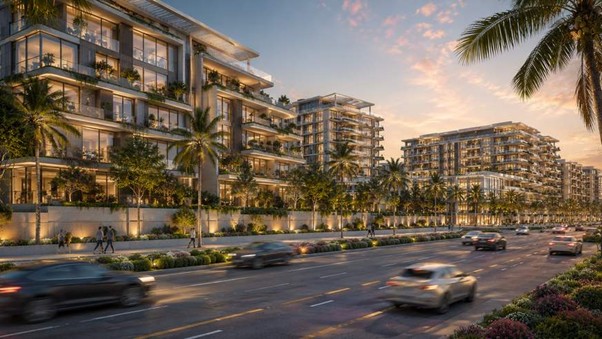
A frequent error in commercial proposals is to render the building but without showing it in the context of the environment. Investors are interested in the project’s relationship to the surrounding area, accessibility, and connection to the local infrastructure.
The following should be incorporated in effective renders:
- Parks and recreation facilities
- The following elements are located in the vicinity of the building:
- Signage and branding elements, particularly in retail / hospital projects.
This context gives investors peace of mind that the design is thought out through a lens of a working commercial ecosystem rather than solely a structure.
Tip 3: Use Animation to Tell a Story
Whilst static images are good, 3D walkthrough animation brings investor presentations to another level. Rather than a single frozen frame, investors are able to fly through the entire building to see how spaces connect and how they flow through the common areas of the building.
Animation can be very helpful in:
- There are various types of large-scale developments, where scale is difficult to capture in a single photograph.
- Mixed-use properties with more than one function (retail/office/residential)
- Join a dynamic presentation and make an impact at investor pitch meetings, rather than at the static presentation level.
A good animation can also be used as marketing later, as the project progresses to leasing and/or sales.
Tip 4: Highlight Functional Spaces, Not Just Facades
Many commercial rendering jobs are very much about the exterior of the building, and overlook how the interior space will perform. Long term value and tenant attraction are a project’s lobby areas, common corridors, parking structures and amenity spaces.
Some interior views with detailed 3D interior renderings complement the exterior shots to provide a more holistic view of the investment and demonstrate the design team’s commitment to the user experience, not just what it looks like on the street.

Tip 5: Align Renders with Financial Projections
This is something many teams fail to do: the numbers in your pitch deck should be reinforced in a way that’s quickly apparent. If you have targeted a high-end retail experience or office on your projections, your commercial 3d rendering must look the part. If the visualization and the finance is not consistent, it can lead to uncertainty around the overall coherence of the project.
If you’re looking to build a premium leasing building, for instance, the materials, finishes, and overall design should be of a premium quality, not a budget building.
Tip 6: Invest in Quality Over Speed
Often, investors can spot a rushed render from a well done one and it may be tempting to rush production of a render to meet the pitch deadline. A poor lighting, flat texture or unrealistic proportions can undermine an otherwise good proposal.
When you work with seasoned commercial architectural rendering services, you can rest assured that your visuals will reach the technical and aesthetic requirements that investors are looking for, and that they won’t have to make any last-minute changes and revisions that might delay a pitch meeting.
Tip 7: Prepare Multiple Formats for Different Audiences
People from different walks of life react to pictures in different ways. Others like to browse a printed deck of pretty still photos, while others are more interested in a walkthrough or a brief, animated video during a live show. From a boardroom presentation to an online investor call, having your commercial building rendering in a variety of formats ensures you’re prepared for any situation you encounter.
Also Read: Home 3D Rendering Services: How CGI Helps Sell Properties Faster
Frequently Asked Questions (FAQ)
Q1. Why do investors respond better to 3D renders than blueprints?
Renders are the visuals that turn technical plans into realistic pictures to make the investors feel connected with the project and understand it thoroughly.
Q2. What’s the difference between a static render and architectural animation?
A static render is a single image, and an animation can simulate movement through and/or around the building, providing for a more immersive presentation.
Q3. How detailed should a commercial render be for an investor pitch?
It should be photorealistic, with materials, lighting and contextual elements rendered accurately – don’t attempt to be overly stylised or unrealistic or it will lack credibility.
Q4. Should renders match the financial projections in a pitch deck?
Yes, the message of the visual, and where it is positioned (premium vs budget) should be in sync with the financial story to prevent dissonance.
Q5. Can commercial renders be reused for marketing after investor approval?
Certain enterprises do repurpose investor-grade renders for leasing, sales and for larger marketing campaigns.
Final Thoughts
Securing investors’ approval for a commercial project goes as much into the perception as it does into the numbers themselves. The financial model is crucial, but it’s not the only thing that investors are interested in. They need to trust the vision behind the model and what better way to do that than through a clean and realistic visual? Investing in high-quality commercial 3d rendering, matching your visuals with your financial story, and employing some 3d rendering tricks such as architectural animation to make your project come to life are all things that will help you get your project funded and moving.
In today’s competitive investment world, the developers who demonstrate instead of explain is the ones that have the best chance to receive approval and rendering is the way you demonstrate. Interested in the expenses? Get a price list now, and receive a personalized quotation for your next project in 24 hours!
