
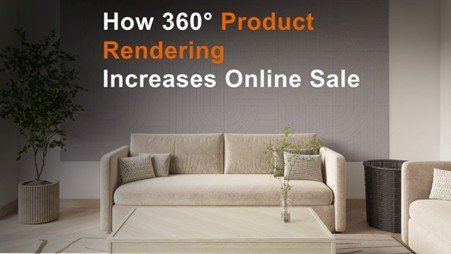
There is no way for online shoppers to touch and hold or physically inspect any product before purchasing – one of the biggest reasons for cart abandonment and returns. So far 360 product rendering has proven to be one of the best solutions to this problem, enabling customers to see a product from any point of view and directly from their screen like in a physical store.
Let’s start by understanding how 360° rendering works, the reasons it’s becoming a game-changer for ecommerce brands and how it directly helps to boost conversions and sales.
What Is 360° Product Rendering?
In 360° product rendering, a full 3d product rendering is rendered from several angles, enabling customers to interactively rotate the product and view it from different angles online. In addition to static photographs, viewers can spin the product, zoom in on specific details or move the product around to view it from a different perspective, much like physically holding the product.
Compared to regular photography, this kind of product CGI is produced entirely by using 3D modeling software and can frequently begin with a very detailed CAD drafting, allowing brands to create an endless variety of angles, colours and variations without having to re-shoot physical samples each time.
Why Static Images Are No Longer Enough
The traditional product photography approach is a classic one that ecommerce has long used; a few photos of the front, back, and perhaps one angle were usually used. However, with the changing expectations of customers, static images often feel constrained, particularly for products that have texture or shape, or where the function of the product is important.
Establishing a consistent product visualization by flat photography is also problematic. Lighting and shadows can differ between one shoot and another as well as backgrounds, creating a disjointed product catalog. The answer to this is 360° rendering, which can render perfectly, producing studio quality images across a product line with as many SKUs and colour variations as you can imagine.
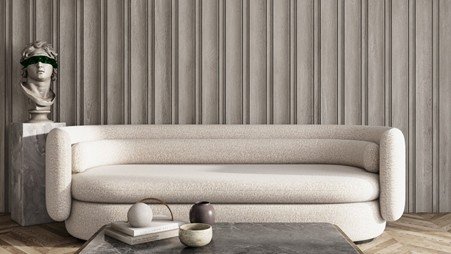
How 360° Rendering Directly Boosts Online Sales
Builds Buyer Confidence
Uncertainty is one of the most significant obstacles to online shopping. Before customers make a purchase, they want to know exactly what they’re getting. CGI product rendering takes this away by enabling customers to examine a product up close and personal – from the stitching of a bag, the texture of a fabric, to the placement of a button on a piece of electronic equipment, before they decide to put it in their shopping cart.
This transparency is important as it fosters trust; and trust directly leads to higher conversion rates.
Reduces Returns and Refunds
One of the biggest costing factors in ecommerce is product returns – frequently due to a discrepancy between what is expected and what is delivered to the customer. By allowing customers to fully explore products through product rotation views before purchase, they are able to get a much better idea of size, shape and design which reduces returns from “not what I expected.”
Increases Time Spent on Product Pages
Engagement is naturally encouraged with interactive elements. If customers are able to click around to view different angles of a product, they will spend more time on the page, exploring different details and angles. In general, the longer a person spends on a page, the better the odds that they will purchase a product. If they take the time to investigate a product, the chances are better that they will purchase it, which is why longer time on page is better.
Differentiates Brands in a Crowded Market
Many competitors are leveraging similar photography techniques in very competitive ecommerce categories like fashion, furniture, electronics and cosmetics. Creating an interactive 360° experience with advanced 3d product visualization is an immediate differentiator for brands and is a sign of a better and more detailed shopping experience.
Supports Faster, More Flexible Content Production
Photography, which is done traditionally involves physical samples, studio time, and photographers and can be time-consuming and costly for brands with a large catalog of products or those that change products often. CGI-based rendering allows teams to create new colorways, materials or angle variations without having to reshoot each one physically. It significantly accelerates their content creation process for new products or seasonal changes.
Where 360° Rendering Works Best
Almost any product can benefit from 360° visualization, however, it seems to work best for products where shape, texture and detail play a big role in purchasing decisions:
- Furniture and home goods provide customers with the opportunity to view materials, joinery and proportions.
- Fashion and accessories demonstrating texture, stitches and fit of the fabric at various perspectives
- Electronics using bright colors and graphics to emphasize ports, buttons, and design elements that are usually absent in static images
- Automotive and industrial products clearly demonstrating complex shapes and mechanical components.
- Jewelry and luxury goods moving with emphasis on craft, shine and fine detail
In all of these areas, being able to explore a product in detail online first-hand tackles the apprehensions people may have about online shopping.

Integrating 360° Rendering Into Your Ecommerce Strategy
360° product visualization does not mean you have to overhaul your website. Most modern eCommerce platforms offer embedded 360° viewers, which can be embedded into the existing product page without replacing the traditional images and videos.
Brands usually begin by targeting best-selling or high dollar products where the investment in detailed product CGI will provide the biggest return on investment in terms of higher conversion and decreased returns. As some brands begin to notice that there are positive sales performance impacts, many of them begin to roll out their 360° rendering into their wider catalog over time. As more brands experience measurable positive sales performance benefits, many expand their 360° rendering into their wider catalogs over time.
Also Read: Hospitality Design 3D Rendering: A Complete Guide
Frequently Asked Questions (FAQ)
Q1. What is 360° product rendering?
It’s a CG technique which enables customers to rotate and view a product from all angles online, just as they would do in a physical store.
Q2. How does 360° rendering reduce product returns?
Providing consumers with more information about size, shape, and design prior to purchase, minimizing the chances of mismatched expectations.
Q3. Is 360° rendering more expensive than regular product photography?
The initial set up is more expensive, but avoids repeated re-shoots for different colors or variants, potentially saving money in the long term.
Q4. Which products benefit most from 360° rendering?
The impact on conversions is greatest for products that have detail attributes, such as furniture, fashion, electronics, jewelry and more.
Q5. Can 360° renders be added to an existing ecommerce website?
Yes, the majority of ecommerce platforms have embedded 360° viewers that can be integrated with their existing product images and videos.
Final Thoughts
The brands that develop more interactive, richer product experiences are the ones who always beat the brands with just plain photos in their online stores. Combined with digital browsing, 360 product rendering helps to bridge the gap between the online and offline experience, and offers consumers the confidence to make their purchase – all while minimizing returns and bolstering brand image.
Adding a little CGI product rendering and product rotation views to a catalog is one of the best investments you can make to improve online sales, whether you’re introducing a new product to market or you are just trying to keep your catalog up to date.
Ready to transform your product pages? Contact our 3d rendering company today for a free consultation, or download our price list to get a custom quote for your 360° product rendering project.
