
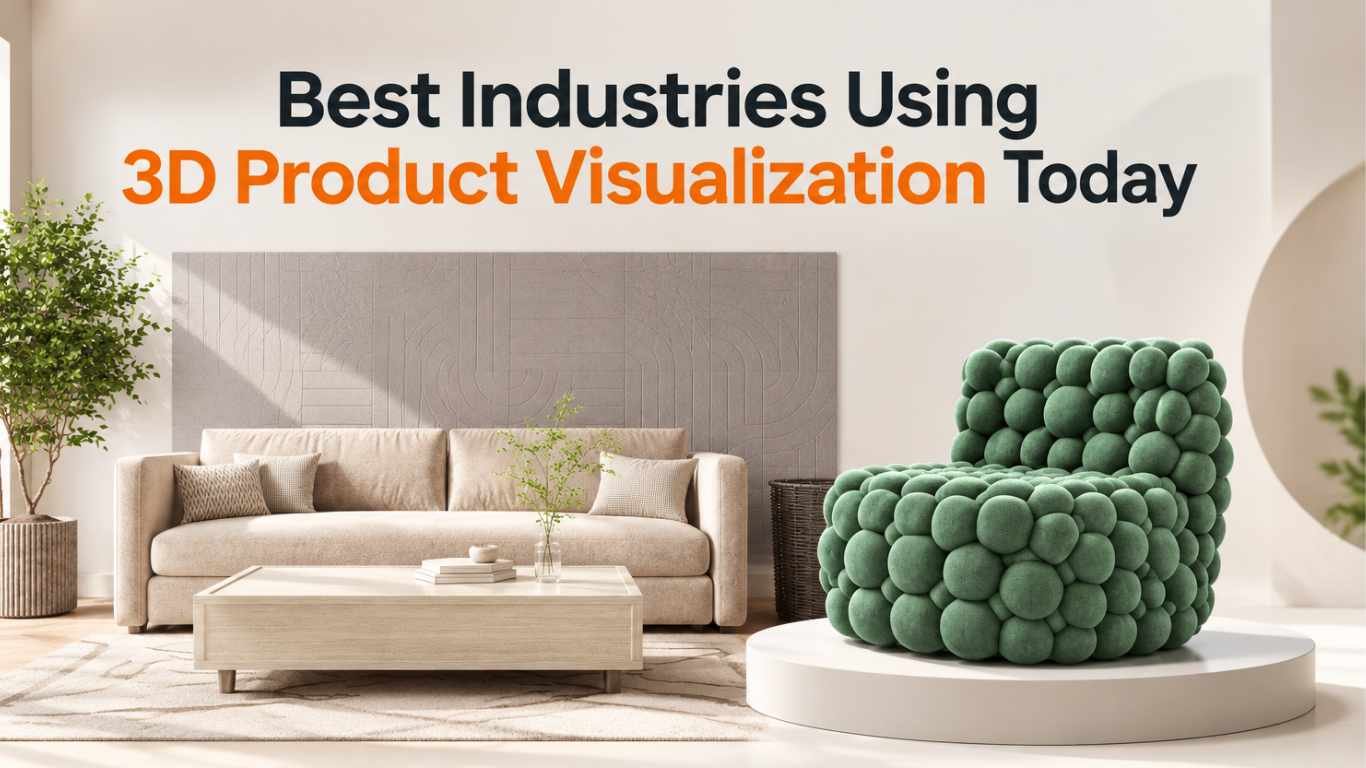
While visuals have always been a crucial element of purchase, companies in each and every industry are going past 2D photographs to make their products come alive via 3D product visualization. Whether it’s a furniture showroom, car dealership, real estate developer, or web retailer, 3D visuals are changing the way things are marketed, customized and sold. This article looks at industries that are benefiting the most from this technology, and why it’s no longer a novelty.
What Is 3D Product Visualization?
3D product visualization involves the use of specific 3D rendering software to produce the three dimensional images of physical products. Rather than just using real photos, brands develop an accurate 3D model that can be rendered in any environment, lighting condition, color or configuration. These are the images that can be static, 360 degree spins or fully interactive 3D configurators, all of which can be integrated into a website.
3D visualisation is far more flexible than traditional photography. Multiple variations of a single 3D model can be created without having to produce a physical product. This is particularly beneficial in industries that deal with a vast array of products, regular updates, or high levels of customization.
Furniture Industry
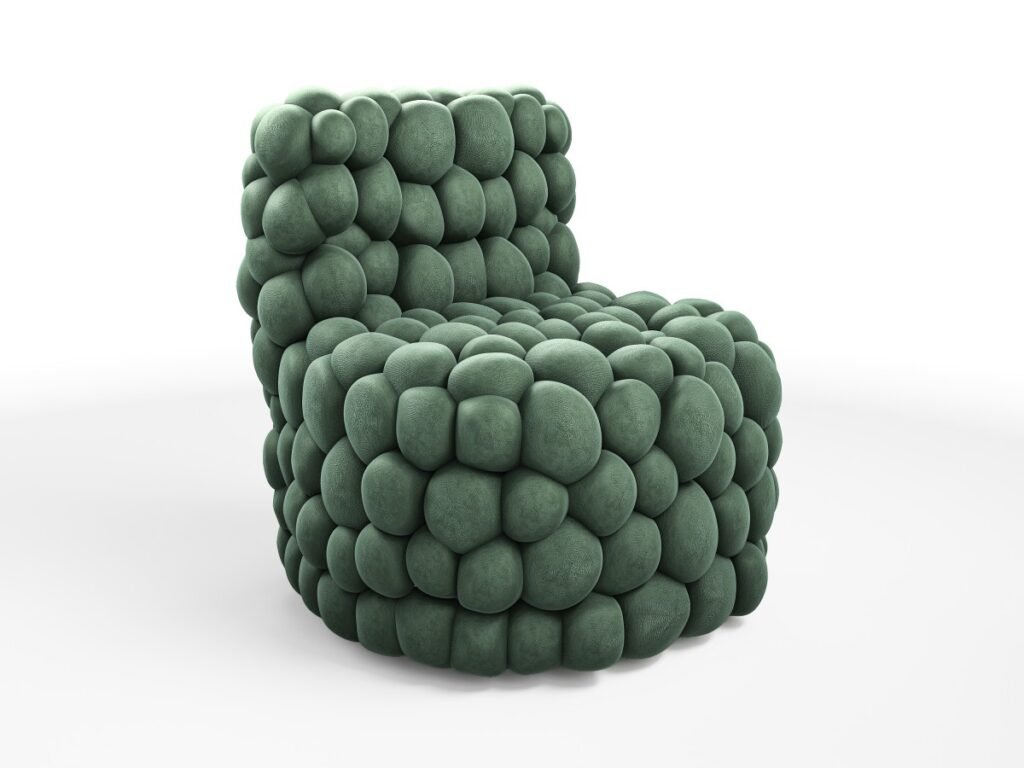
This technology has been used in furniture industry one of the earliest and biggest adopters of the technology. By using Furniture 3D rendering, furniture manufacturers and retailers can offer guests a selection of different fabrics, finishes and room scenes for sofas, tables, and cabinets without having to produce physically for all the combinations.
Interior rendering visuals are used by retailers to make customers see what a couch is going to look like when it is in different colors, or how a dining set will fit into different room styles. This helps minimize return due to expectation mismatches and accelerates the design to market process by no longer having to wait for physical prototypes to be on the market before furniture brands can market their new collections.

Automotive Industry
Even before the time of mainstream adoption, 3D visualization in ecommerce, car manufacturers were early adopters in using 3D visualization. Automotive 3D rendering is a powerful tool for automotive brands to present a vehicle in vivid detail and accuracy, including paintwork, interior finishes and design, which can be difficult to capture in conventional photography.
Most automotive sites now have car configurators that let car buyers choose colors, wheels, and trim packages and instantly visualize a photorealistic image of the car. It also assists manufacturers to sell cars before they are actually produced, thereby giving marketing teams an edge during the launch of new cars.
Real Estate Industry
The challenge of real estate has always been the ability to visualize before the structure is built – and 3D visualization is now the answer. Our exterior rendering service lets real estate developers display their photorealistic apartment, villa or commercial space renders well before the groundbreaking, making real estate 3D visualization a popular marketing tool.
Virtual walkthroughs, furnished room renders and visual exterior rendering work allow prospective buyers to make emotional and financial decisions at an earlier stage of the sales process. This is particularly beneficial in cases of off plan property sales, where regular photography is not an option as the building has not yet been built.
E-commerce and Retail
One of the biggest markets for such technology is online retail. 3D product rendering visualization for eCommerce enables brands to showcase products with a greater degree of detail and interactivity compared to traditional photographs. I can switch products, zoom in on the material, and sometimes change colours or even individual parts on the product page.
For products such as electronics, cosmetics packaging, footwear and home goods, where users feel compelled to look at a product before buying it online, this is especially beneficial. Research conducted in the e-commerce sector has repeatedly demonstrated that interactive 3D images boost confidence and minimize returns, over static photographs alone.
Jewelry and Fashion
Though less talked about, jewelry and fashion brands have also begun to leverage 3D visualization to showcase fine details of a garment, including stitching patterns, fabric texture and gemstone cuts. It can be very handy for made-to-order or customizable items, which would otherwise need a separate actual photoshoot for each variation.
Why These Industries Are Investing in 3D Visualization
These sectors are early adopters due to a few common themes:
- High product variation: Several color, material and style options are available from furniture, automotive and fashion brands.
- Pre-launch marketing needs: Industries like real estate and automobiles often require artwork prior to the product or building being built.
- Customer experience expectations: When it comes to online buying, customers have grown more and more demanding when it comes to interactive and detailed visuals.
- Cost efficiency at scale: After the 3D model is created, it’s much less expensive to create new variations than to conduct repeated photoshoots.
The Future of 3D Product Visualization
With the advancement of 3D rendering technology and its increasing accessibility, more industries are projected to use 3D visualization, such as the healthcare sector with its equipment and industrial machinery, as well as the food and beverage packaging industry. When paired with AR and VR, 3D product visualization is set to be a core component of digital marketing in almost all industries.
Also Read: CGI vs Product Photography: Which Delivers Better ROI?
FAQs
1. Which industries benefit the most from 3D product visualization?
The largest users today are furniture, automotive, real estate, and e-commerce, but jewelry, fashion and industrial applications are rapidly joining the fray.
2. Is furniture 3D rendering cheaper than traditional furniture photography?
Absolutely! particularly when it comes to scale. When a 3D model of a furniture piece has been developed, you can create several different color and material combinations without added costs compared to shooting the various options physically.
3. How does automotive 3D rendering help car manufacturers?
Automotive 3D rendering services can enable manufacturers to introduce vehicles before they are made and interactive configurators and show design details to a degree that standard photography may not always achieve.
4. Can real estate 3D visualization be used for properties that aren’t built yet?
Yes, one of its most significant benefits is this. One of the ways real estate 3D visualization is most commonly used is in the pre-construction marketing stage, where they can sell the units before the construction of the real estate structures.
5. Why is 3D visualization for e-commerce becoming so popular?
In contrast to a 2D photo that was the only way to watch products, 3D visualization for e-commerce allows consumers to interact with them – rotate, zoom, customize – to give them greater confidence and less product returns.
Final Thoughts
The use of 3D product visualization has added value to various industries from furniture shops to car dealerships and pre-construction real estate, providing greater flexibility and ease, decreasing costs, and improving the customer experience. From furniture 3D rendering to automotive 3D rendering, real estate 3D rendering to e-commerce 3D visualization, brands who have jumped the curve are gaining an edge in customer engagement and marketing scalability for the years to come.
