
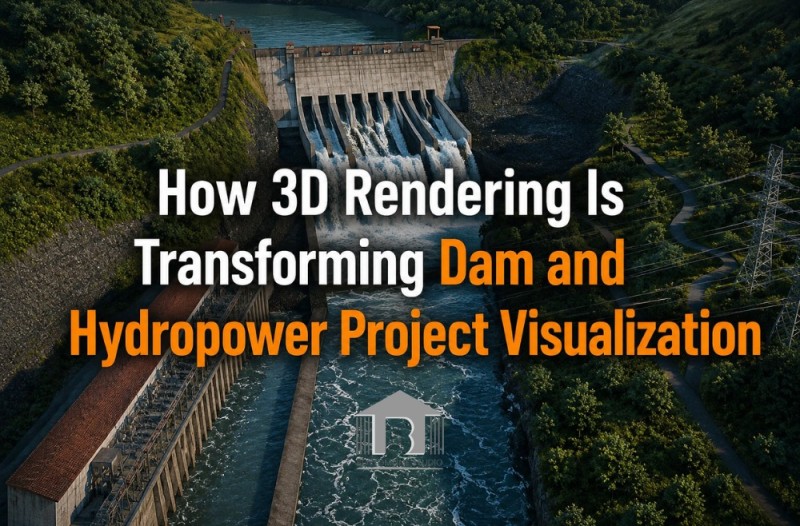
The construction of dams is a huge infrastructure project that requires a lot of money, engineering, planning, and time. It is important that the stakeholders have a clear picture of the final shape, surrounding area and long term effects of the structure many years before it is built. That’s where dam 3D rendering has proved to be an invaluable asset for engineers, governments and investors to view a project before the first concrete is laid.
What Is Dam 3D Rendering?
The 3D rendering of a dam is the act of taking the engineering plans and technical drawings, produced through CAD drafting, and creating a realistic 3D image of it. The use of 2D blueprints or schematics is not the only way to let stakeholders understand what the structure will look like, how it fits into the surrounding terrain, and how water flow and reservoir levels will relate to the landscape. This clarity is essential when safety, scale and environmental concerns are paramount in a project.
Unlike smaller architectural and residential projects, dams present specially daunting engineering challenges, such as large concrete or earthen dams, spillways, powerhouses, and complex hydrological systems. The accuracy of the render depends on engineering data and also environmental context, which is a very niche of the 3D rendering industry.
Why Large-Scale Infrastructure Development Relies on 3D Visualization
A number of government authorities, environmental agencies, and financial institutions need to approve infrastructure development projects, particularly dams, dykes, and reservoirs. While not all of these stakeholders will have an engineering background, each one must be able to understand the project. That’s where 3D rendering comes in, as it transforms complex technical information into easy-to-understand visuals that can facilitate the process of approval and prevent misunderstandings among all parties involved.
It is also important to maintain a consistent, evolving visual reference because dam projects are typically a multi-year process from design to construction and require both tracking of design changes over time as well as a consistent view over time. The more detailed engineering information is resolved, the more up-to-date the renders will be to keep everyone involved, from site engineers to the government reviewers, on the same page regarding the project’s current status.
The Role of Engineering Animation in Dam Projects
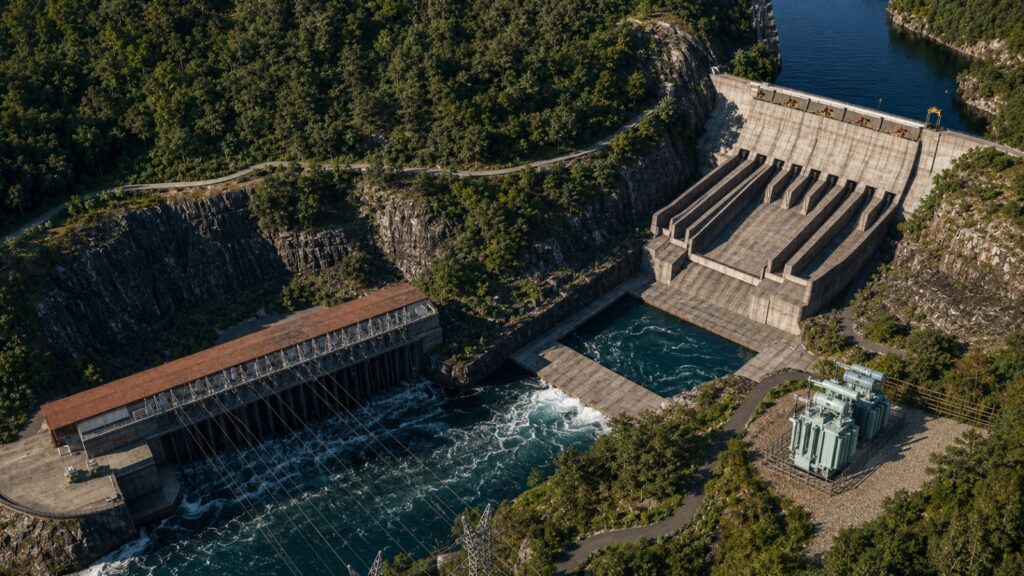
In addition to the static photographs, there are engineering animation dynamic photos that offer insight into how the dam works over time that enhance many dam projects. A sequence of images can show water flow, a spillway action, a flood or a construction phase unlike any still image. This is especially useful for showing safety systems, operational behavior to regulators, engineers, and public.
In addition, engineering animation is beneficial for construction sequence, which demonstrates how a dam will be constructed in stages: from the initial excavation, foundation construction, and placement of concrete (or earthfill), and then the installation of mechanical and electrical systems. This visualisation is helpful for project managers to coordinate timelines and communicate the progress milestones with the stakeholders through the build.
Visualizing Hydropower Projects Before Construction Begins
Technical visualization is important in the development process of any hydropower project, and numerous dams are constructed specifically to facilitate such development. In 3D renderings, turbine housing, powerhouse buildings, and dam/stream level changes can be used to demonstrate how they relate to the energy systems. This allows the technical feasibility to be communicated to the investors and also helps to show the integration with the environment to regulatory authorities and local communities.
In the case of a hydropower specific project they can also be used to show how much energy a project can produce in relation to a physical design of how the turbines are positioned, water intake structures and discharge points can interact within the wider dam system. This significantly helps engineers and investors to assess design efficiency prior to substantial capital investment.
Where 3D Rendering Adds Value at Each Project Stage
| Project Stage | Role of 3D Rendering |
| Feasibility & Concept | Test design options, evaluate site suitability |
| Environmental Review | Visualize ecological and terrain impact |
| Government Approval | Communicate design intent to regulators clearly |
| Investor Presentations | Demonstrate scale, value, and technical feasibility |
| Construction Planning | Sequence build phases through engineering animation |
| Public Consultation | Help communities understand project scope and impact |
Key Benefits of 3D Rendering for Dam and Water Infrastructure Projects
- Improved Stakeholder Understanding – Explains technical engineering issues in a non-technical way.
- Faster Approvals – Visuals make it easier for government agencies and investors to assess projects.
- Better Risk Communication – Applies safety procedures, flood control and structural stability prior to construction.
- Stronger Public Engagement – Supports engagement with communities on project impact at public consultations.
- Reduced Costly Design Changes – Solves upfront design and/or environmental issues.
Common Applications of Dam 3D Rendering
3D rendering can be applied on numerous phases of a dam project such as:
- Feasibility Studies – Reporting early ideas to assess feasibility of projects.
- Government and Regulatory Approvals – Making visuals easily understood for environmental and safety reviews.
- Investor Presentations – To quantify the project to garner the necessary funds.
- Public Consultations – Supporting local communities in comprehending the project’s design and environmental impact.
How Dam Rendering Supports Engineering and Environmental Planning
The design and construction of dams must be carefully coordinated with environmental planning. The 3D rendering can help the team see how the dam will affect the surrounding terrain, water bodies, and ecosystems, helping to identify potential challenges to the terrain, flood risks, or environmental concerns before construction begins. This forward-thinking strategy aids in the development of smarter, safer, and more sustainable infrastructure.
Read Also: The Role of 3D Rendering in Luxury Real Estate Marketing
Case Study: Bringing the Subansiri Lower Hydroelectric Project to Life
One of the most recent examples of our work in real-world dam 3D modeling and engineering animation was in partnership with the National Hydropower Corporation (NHPC) Limited, one of India’s biggest hydropower companies, for the Subansiri Lower Hydroelectric Project, one of the largest hydroelectric projects in India.
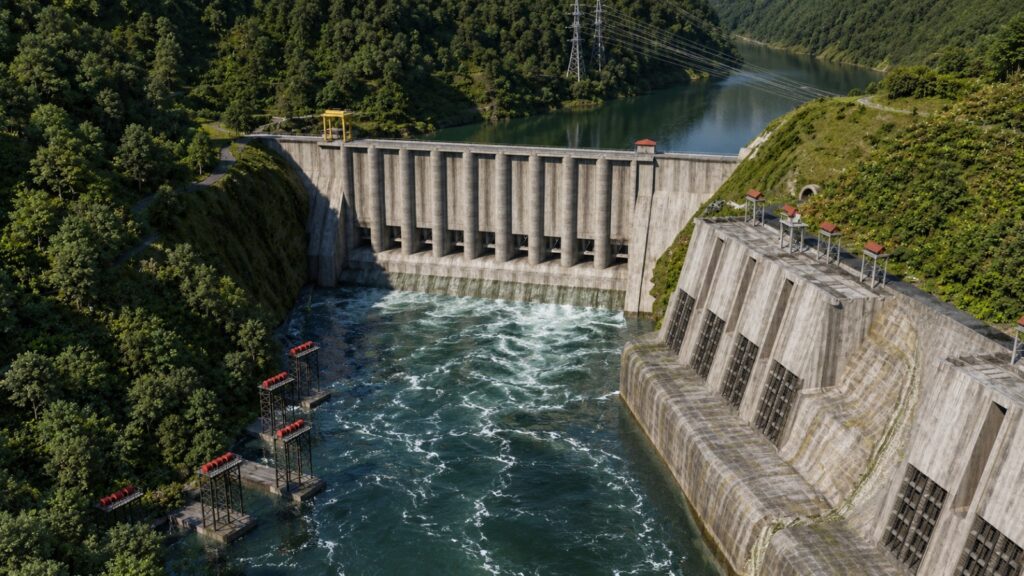
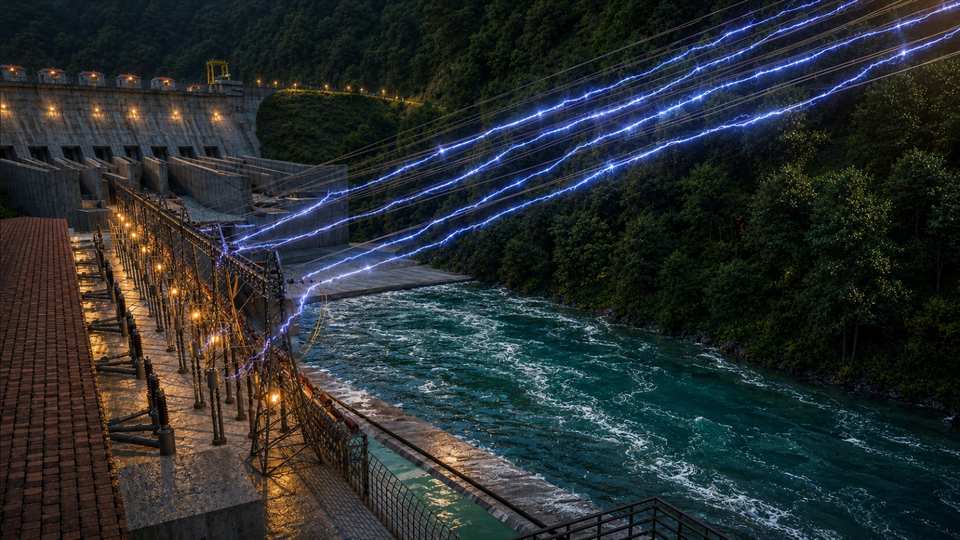
The project demanded an extremely detailed and technically correct 3D model and 3D walkthrough animation of the entire facility, which encompassed the massive concrete gravity dam and the spillway structures, powerhouse complex, water intake systems, transformer yard and surrounding transmission assets. In addition to the buildings, our team also created the topography, forests, river systems and reservoir of the site to provide stakeholders with a comprehensive, realistic view of the project in its natural setting.
An important component of the visualisation was the simulation of the behaviour of the water reservoir level, spillway discharge, turbulent downstream flow and river currents, to show exactly how the dam would operate during use. The final visualization, which included physically accurate lighting, realistic concrete and metallic textures, and a cinematic aerial walkthrough animation, provided NHPC with a powerful tool, before the project was completed, for presentations to the stakeholders, government approvals, and public communication.
This project illustrates the very same issues we have been discussing in this article, which are complex terrain, large engineering structures, and good communication between technical and non-technical groups, and demonstrates how dam 3D rendering and engineering animation can be effectively used even at the national infrastructure level.
The entire animation of the Subansiri Lower Hydroelectric Project can be viewed here.
Final Thoughts
With the growing scale and complexity of dam and hydropower projects, dam 3D rendering has become a key tool in helping to communicate the engineering intent, gain approvals and mitigate risk. From detailed static renders to dynamic engineering animation, visualization assists in clarifying some of the most complex infrastructure projects in the world to ensure safer, faster and more successful outcomes for all hydropower projects and large-scale water infrastructure development.
High-quality 3D visualization is not just a communication solution for engineers, developers and government agencies working on dam projects partnering with an experienced 3D rendering company is an important aspect of planning, safety and successful project outcomes.
