
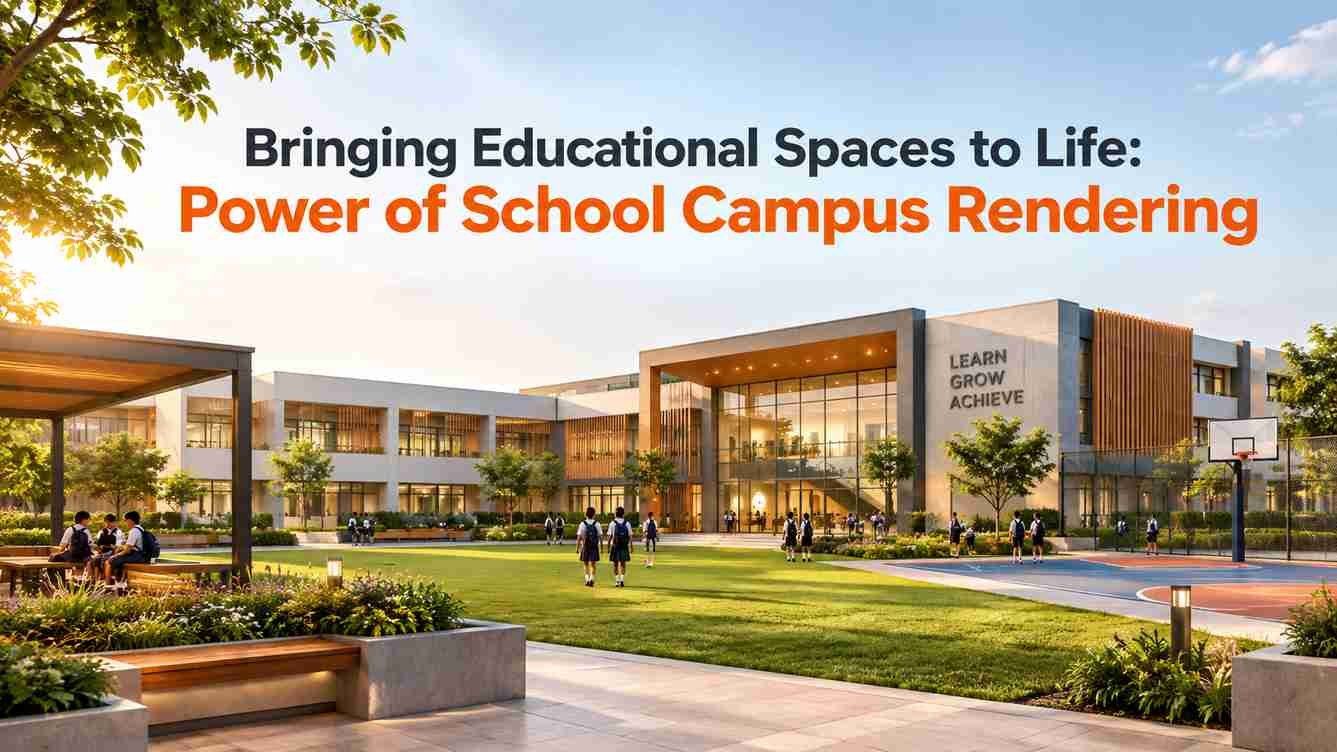
Educational institutions are increasingly investing in visual storytelling to attract students, secure funding, and communicate ambitious building plans before construction even begins. Whether it’s a new school wing or an entire university campus expansion, school and university campus rendering has become an essential tool for administrators, architects, and marketing teams alike. In this article, we explore why campus rendering matters, how it’s used, and what makes it such a valuable investment for educational institutions today.
What Is Campus Rendering?
Campus rendering is the process of creating photorealistic 3D visuals of educational buildings, grounds, and facilities before or during construction. Using architectural 3D modeling software, artists build accurate digital representations of classrooms, libraries, sports facilities, dormitories, and outdoor spaces, then render them with realistic lighting, landscaping, and materials.
This technique falls under the broader category of 3D campus visualization, which can include static images, walkthrough videos, or even interactive tours that let stakeholders explore a campus digitally before a single brick is laid.
Why Schools and Universities Need Rendering Services
Fundraising and Donor Engagement
Universities often rely on donations to fund new buildings, research centers, or renovation projects. Campus master plan rendering helps development teams present a compelling visual story to potential donors, showing exactly how their contribution will shape the physical campus. A well-crafted rendering can make the difference between a vague pitch and a donor-ready proposal that generates real commitment.
Student Recruitment and Marketing
Prospective students and their families increasingly research campuses online before ever visiting in person. High-quality architectural rendering for schools and universities allows admissions teams to showcase modern facilities, planned expansions, and campus life through marketing materials, websites, and virtual tours, creating a strong first impression long before an in-person visit.
Stakeholder and Board Approval
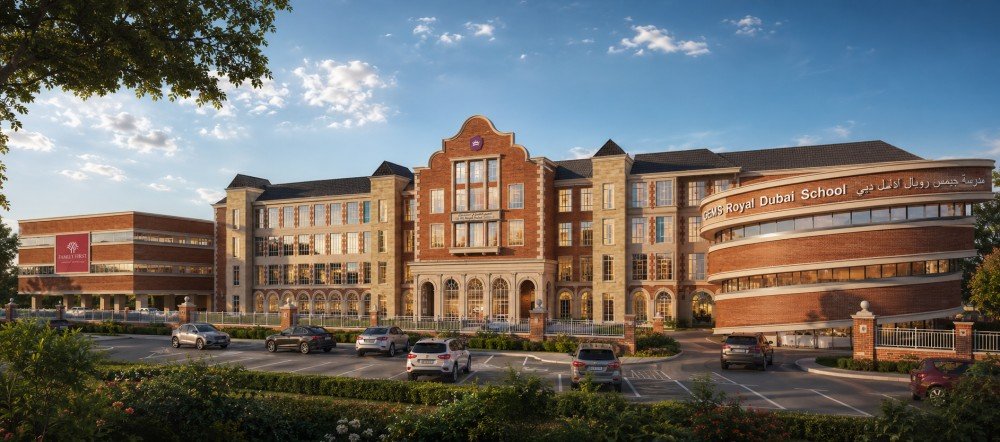
Before construction begins, university boards, city planning committees, and other stakeholders typically need to approve new designs. Educational institution rendering provides a clear, accurate visual reference that helps decision-makers understand spatial layouts, building aesthetics, and how new structures will integrate with existing campus architecture.
Community and Public Relations
Educational institutions often need public support for large construction projects, especially when they affect surrounding neighborhoods. Renderings help communicate design intent to local communities, easing concerns about traffic, noise, or visual impact by showing exactly what the finished project will look like.
Key Elements of Effective Campus Rendering
Realistic Landscaping and Context
Campuses aren’t just buildings; they’re integrated environments with walkways, trees, courtyards, and outdoor gathering spaces. Effective university campus rendering captures this holistic environment, showing how new structures interact with existing greenery, pathways, and surrounding architecture.
Accurate Scale and Human Presence
Good campus renders often include human figures to convey scale and liveliness. Showing students walking, sitting, or gathering in outdoor spaces helps viewers emotionally connect with the space, rather than seeing an empty, sterile structure.
Day and Seasonal Variations
Many campus rendering projects include multiple lighting scenarios, such as daytime, evening, or different seasons, to show how a space feels throughout the year. This is particularly valuable for marketing materials aimed at prospective students who want to envision campus life year-round.
Interior and Exterior Views
While our exterior rendering work showcases overall architecture, interior renderings of classrooms, libraries, labs, and common areas help stakeholders understand the functional design and atmosphere of learning spaces.
Master Planning for Long-Term Growth
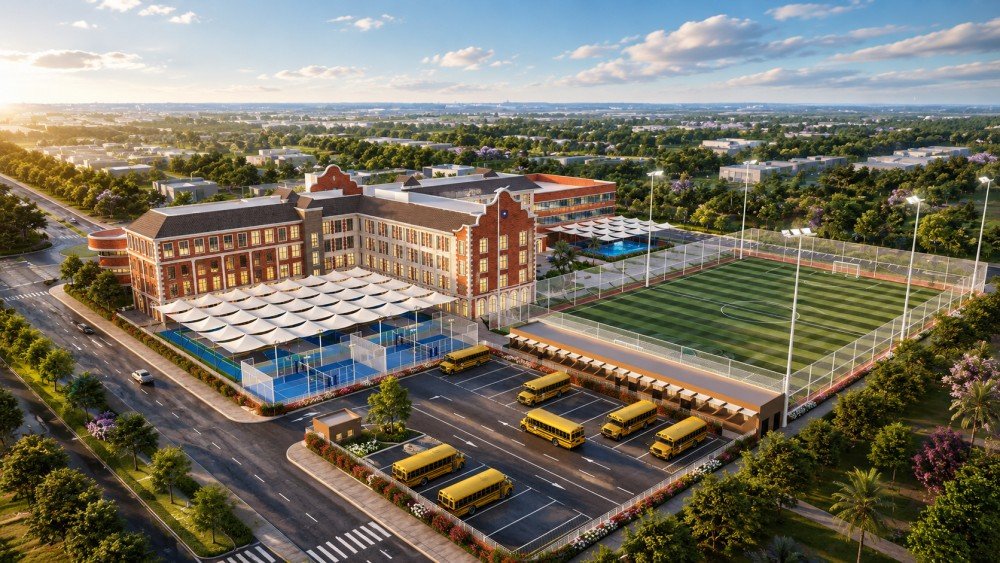
Many universities don’t just need renderings for a single building; they need a comprehensive vision for how the entire campus will evolve over the next decade or more. Campus master plan rendering supports this long-term planning by visualizing multiple phases of development, helping administrators sequence construction projects, allocate budgets, and communicate a cohesive long-term vision to stakeholders and donors alike.
The Role of 3D Campus Visualization in Modern Education Marketing
Beyond construction and planning, 3D campus visualization has become a marketing asset in its own right. Virtual campus tours, interactive maps, and rendered promotional videos are now standard on university websites, especially for institutions competing for international students who may never visit in person before enrolling.
Choosing the Right Rendering Partner
Not all rendering studios have experience with the unique demands of educational architecture. When selecting a partner for architectural rendering for schools or universities, institutions should look for:
- Experience with large-scale campus and institutional projects
- Ability to handle both individual buildings and full master plan renderings
- A portfolio demonstrating realistic landscaping and human-scale detail
- Flexibility to produce both static renders and animated walkthroughs that let stakeholders explore the campus digitally
Also Read: Choosing the Right File Formats for 3D Rendering Projects
FAQs
1. What is the difference between campus rendering and architectural rendering?
Campus rendering typically refers to visualizing an entire educational site, including buildings, landscaping, and outdoor spaces, while architectural rendering for schools may focus more narrowly on individual building designs.
2. How does campus master plan rendering help universities?
Campus master plan rendering visualizes multi-phase development projects, helping universities plan construction sequencing, communicate long-term vision to stakeholders, and secure funding for future growth.
3. Can 3D campus visualization be used before construction begins?
Yes, that’s one of its primary purposes. Educational institution rendering allows universities to showcase planned buildings, secure donor and board approval, and generate excitement before groundbreaking even starts.
4. Why do universities use campus renderings for student recruitment?
Prospective students often research campuses online before visiting. High-quality university campus rendering helps admissions teams present modern facilities and planned expansions attractively through websites and marketing materials.
5. What should I look for when choosing a campus rendering company?
Look for a studio with experience in large-scale institutional projects, a strong portfolio featuring realistic landscaping and human-scale detail, and the ability to produce both static renders and animated walkthroughs.
Final Thoughts
As educational institutions compete for students, donors, and community support, school and university campus rendering has become far more than a design tool; it’s a strategic communication asset. From fundraising campaigns to student recruitment and stakeholder approval, high-quality 3D campus visualization helps bring ambitious educational visions to life long before construction begins.
